March 2025
A monthly newsletter of the best behavioural resources from around the web. Enter your details below to start receiving our regular updates.
Panic Is Spreading Faster Than Prices Are Falling
It’s only March, and already, 2025 is shaping up to be a turbulent year for investors.
As you likely know, markets are temporarily down from the recent peak. However, it’s not the size of the decline that’s causing the most damage. It’s the noise.
Every time the market sneezes, the news cycle screams pneumonia. Social media lights up with instant “hot takes,” doom-laden predictions, and amateur economists masquerading as experts. A dip in the great companies of the world becomes a “crash.” A pause in growth becomes a “collapse.” And before you know it, even rational, well-adjusted investors are reaching for the panic button.
The reality? Market declines happen. Always have. Always will.
Volatility is not a flaw in the system—it is the system. But in today’s hyper-connected world, we’ve lost all sense of proportion. Everything is a crisis. Everything is politicised. The combination of market movements and people’s political views is proving toxic.
This is where we come in.
Not just as financial planners or portfolio managers but as behavioural coaches. Because when panic sets in, logic goes out the window. And if no one is there to stop it, years (sometimes decades) of hard work can be undone with a single bad decision.
Maybe you’ve already seen it in the last few weeks. Long-standing clients with well-diversified portfolios and clear long-term plans are spooked. Why? Not necessarily because they’ve seen their valuations fall (it would be best if they haven’t looked), but because they’re seeing headlines that feed their fears, social media posts that confirm their biases, and politicians who are more than happy to pour petrol on the fire.
In times like these, clients start asking questions they wouldn't normally ask. They begin second-guessing the strategy. They look for quick fixes.
Our job is to stop that spiral. To provide context. To remind them that their plan was built with downturns in mind. That volatility isn’t the enemy; emotional decision-making is. In these moments, we are often the only barrier between fear and financial self-sabotage.
The world has changed. The speed and intensity of information has changed. But the fundamentals of good behavioural financial advice haven’t.
Help your clients to stay calm and stay the course. Only we can help them them to stick to the plan when it matters most.
📰 Articles & Blogs
The Surprisingly Superior Empathy Alternative [11 minutes]. Compassionate objectivity is a superior alternative to empathy when navigating clients' emotions.
To Change Your Clients’ View of Retirement, Stop Using This Phrase [4 minutes]. A very simple reframe to help the planning process.
Beautiful vs. Practical Advice [4 minutes]. While beauty and artistry in design or advice can be appealing, practicality and functionality are ultimately more important.
4 Questions to Discover Couples' Risk Tolerance Differences [17 minutes]. Navigating differences between partners is crucial for effective financial planning.
How Advisors Can Help Manage Client Stress [4 minutes]. Advisers can help shape clients' perceptions of their financial stressors and be a resource to lean on.
21 Questions For Financial Advisors To Connect With Clients [25 minutes]. The right questions can significantly enhance the adviser-client relationship.
🎧 Podcasts
TRAP 66 - From Panic to Poise: Guiding Clients Through Market Volatility [92 minutes]. The TRAP pack discuss annual declines and how to get clients through them.
Turn Clients Into Raving Fans By Creating Memorable Experiences [109 minutes]. Financial advice is no longer just about offering services.

📚 Book Recommendations
Poor Charlie’s Almanack: The Essential Wit and Wisdom of Charles T. Munger. An all-time top 10 book for successful people.
🍿 Videos
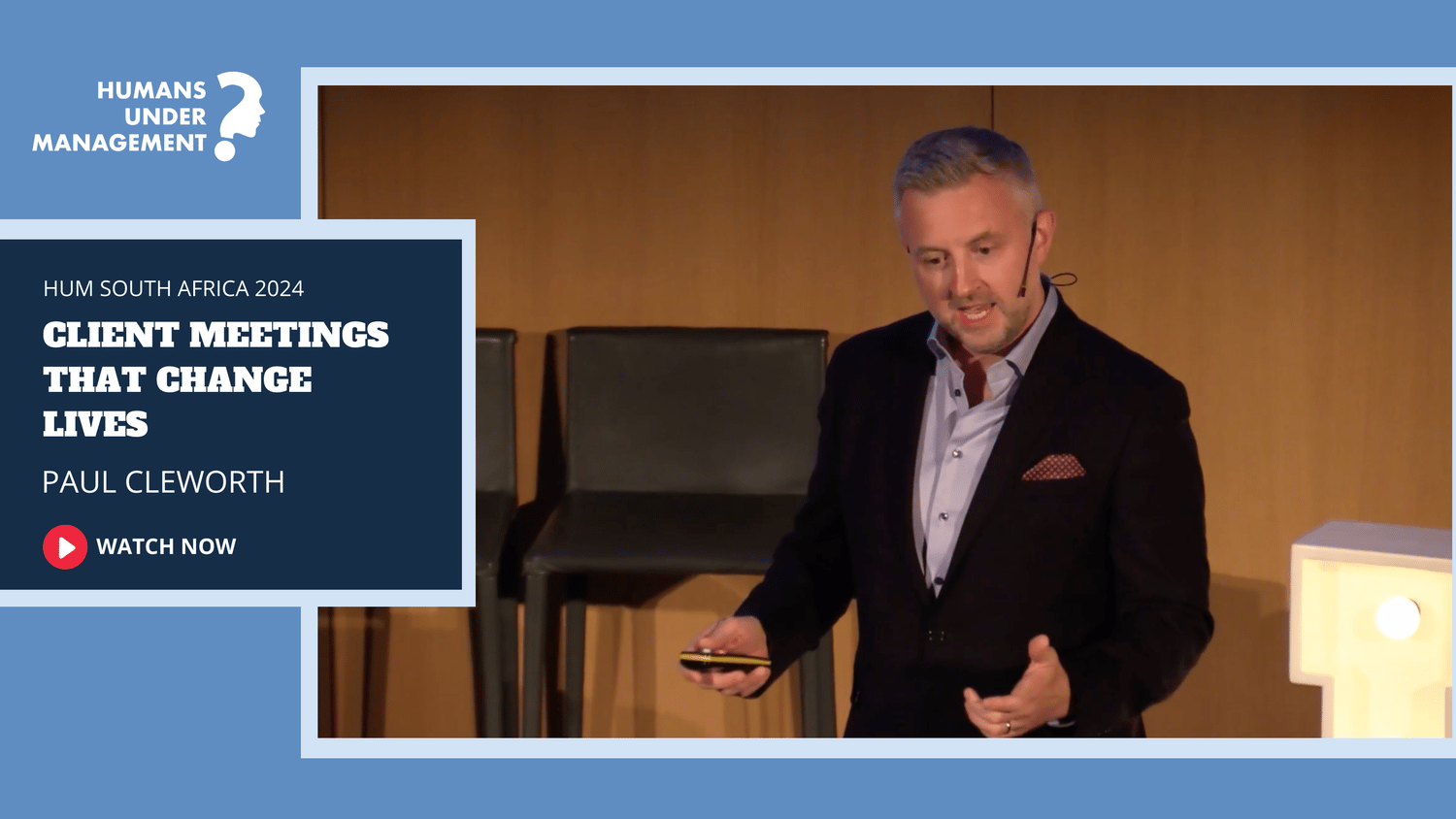
Client Meetings That Change Lives
At the Humans Under Management South Africa 2024 event, Paul Cleworth presented on the transformative power of client meetings.
👏 Encore
Stock Market Crashes: A Look at 150 Years of Bear Markets [10 minutes]
Advisors Are Focusing More on Planning, Passive Investing [3 minutes]
Will AI notetakers short-circuit or supercharge next-gen advisor training? [4 minutes]
Waves and tides [1 minute]