
The Price of Admission
For long-term investors, the ability to earn returns in excess of inflation is the bedrock of any investment strategy. History being our guide, we know that the decision about what percentage of your investment assets to allocate to different asset classes has the biggest impact on future portfolio returns. Equities, or shares in the great businesses of the world, have over the long term provided the best after-inflation returns to investors, making it the best investment vehicle for attaining and maintaining financial independence.
Owning a small share in the best and most innovative businesses across the globe is a thing of wonder. No longer are you spending money to buy the products of the best known brands from around the world, but you are now also a shareholder and stand to benefit from their innovation and ingenuity. Over the last decade, innovation in the capital markets has made it easier and cheaper than ever to own a diversified portfolio of the best businesses across the globe.
However, there is one cost that will never be reduced: the volatility of the stock market. One could say that enduring the regular volatility of the stock market is the price of admission for anyone wanting to build long-term, multi-generational wealth. This fee is not disclosed on fact sheets, and it is not actively brought up by those who sell financial products. But, it's a cornerstone of the financial literate's understanding of the financial markets.
The good news is that a diversified portfolio experiences temporary volatility while providing permanent gains. It's a trade-off that any mature investor should be willing to make. The foundation of good investor behaviour is realistic expectations, and the best way to understand market volatility is to see how often the market experiences corrections. The chart below shows all the occasions the US market has dropped by more than 10% over the last 25 years.
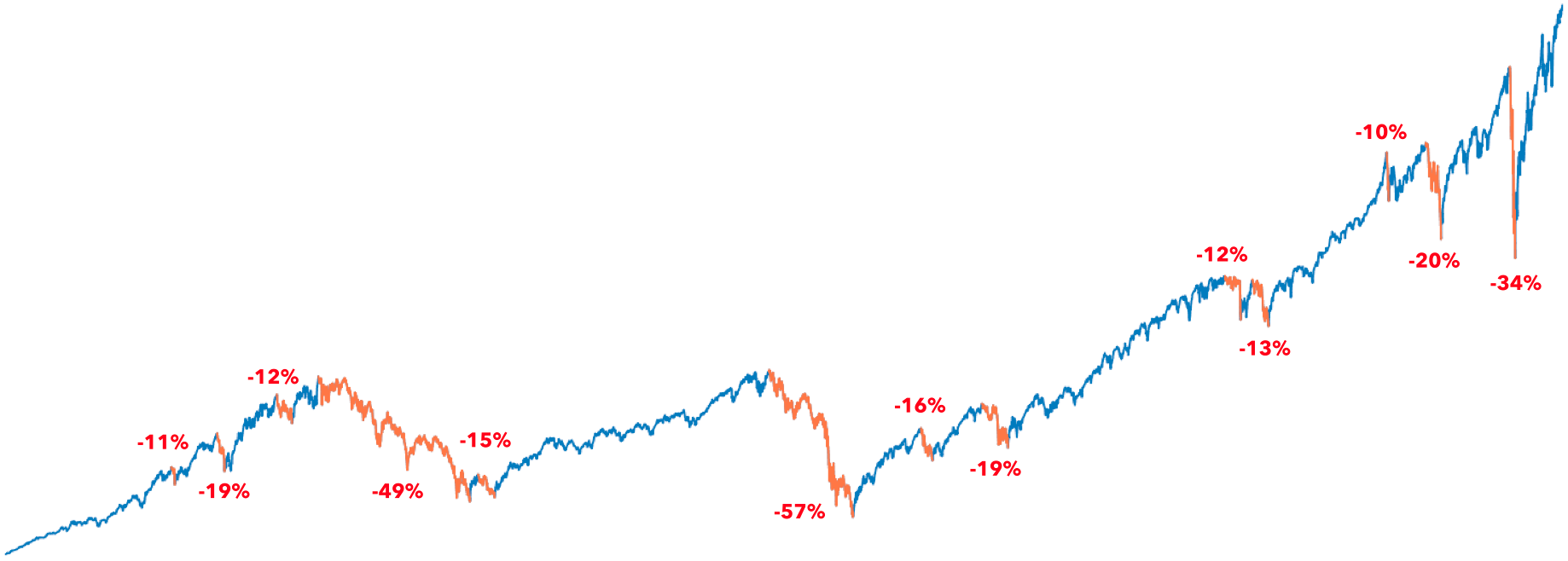
The chart above shows us that these occasions are remarkably normal. What does this mean for us as investors? First, it's a challenge to make sure we have realistic expectations. Second, we need to be honest about our ability to pay the price that is required. While a portfolio made up of different asset classes is likely to experience lower drawdowns than that of the stock market, this will come at the expense of long-term returns.
Helping you to invest in an appropriate portfolio is one of the reasons we exist, and helping you to behave appropriately when the inevitable market declines arrives is the reason we are passionate about what we do. Don't let temporary market declines dictate any changes in your long-term financial plans. As Warren Buffett says, 'The stock market is there to serve you and not to instruct you.'